
Dr. Jordan DeCoste on Why Healthy Thinking Matters Today

There is a frustrating gap between knowing what is good for us and having the tools to actually do it. We are told to be resilient, to manage stress, to “just think about it,” and to make sure we have the right work-life balance. But the path from advice to skill is rarely clear. For Dr. Jordan DeCoste, an academic turned tech founder, this “knowing-doing gap” became a professional obsession. He believes the solution lies in a trainable skillset he calls “Healthy Thinking,” which he defines simply as “the ability to think accurately in any context and to carry forward that judgment only for relevant future use.” The point, Dr. DeCoste insists, is not to lecture on healthy thinking, but to actively train these skills so we can get and keep a life we deserve.
That straightforward definition, however, grew out of a much deeper intellectual inquiry. Still the philosopher, DeCoste first frames healthy thinking with academic precision. He calls it “a mainly discursive effort to navigate a world of non-neutral values with conviction.” He smiles as he catches himself, admitting that’s his “stuffy scholar-speak mainly for impressing mom.” Then, the entrepreneur puts the philosophy to work. This tension between the complex and the practical has defined his journey and is the key to understanding his work.

Talent DR. JORDAN DECOSTE / Photography by IHOR SAVELIEV / Grooming ANASTASIIA SAVELIEVA
For years, he lived squarely in that first world, deep inside academia. His work there evolved from philosophy’s ancient search for meaning to today’s more applied, political questions, like how can multicultural groups make better collective decisions? But in the process of studying and teaching, he grew disillusioned with “higher-learning” institutions. DeCoste came to see university as a “lofty false promise,” where abstract seminars offered no practical skills for the common challenges of life. The academy, he felt, was failing at teaching students “how to go out there and be well.” Eventually, the ethos he inherited from his father’s example of always doing something right the first time gnawed at him, compelling him to leave the theoretical world for one of tangible impact.
After a couple of successful ventures in EdTech, DeCoste stumbled upon the missing piece he needed to truly scale his practical interests. It happened, of all places, on a squash court in a Toronto condo building, in between points with Dr. Ryan Todd, a psychiatrist. It was here they discovered they were climbing the same mountain from different sides. DeCoste was trying to scale a philosophy for better meaning-making; Todd was trying to scale access to the tools of therapy. “We realized,” DeCoste says, “we were both looking to do the same thing ultimately, which was give people access to more accurate thinking techniques so that they could lead healthier lives.”
Their resulting company, Headversity, is a platform designed for the practical challenges of supporting mental health in work and sport organizations. Its approach is a direct response to the passive learning Dr. DeCoste left behind, and to the medical wait lines Dr. Todd could no longer accept. They built Headversity on the familiar principle that you learn best by doing, not simply by listening. The premise is simple: healthy thinking is a skillset, and like any other, it is forged through active practice. The goal is not just to know more, but to build the capacity to consistently make better decisions. It treats healthy thinking not as a fixed trait, but as a practical skillset each of us can develop.
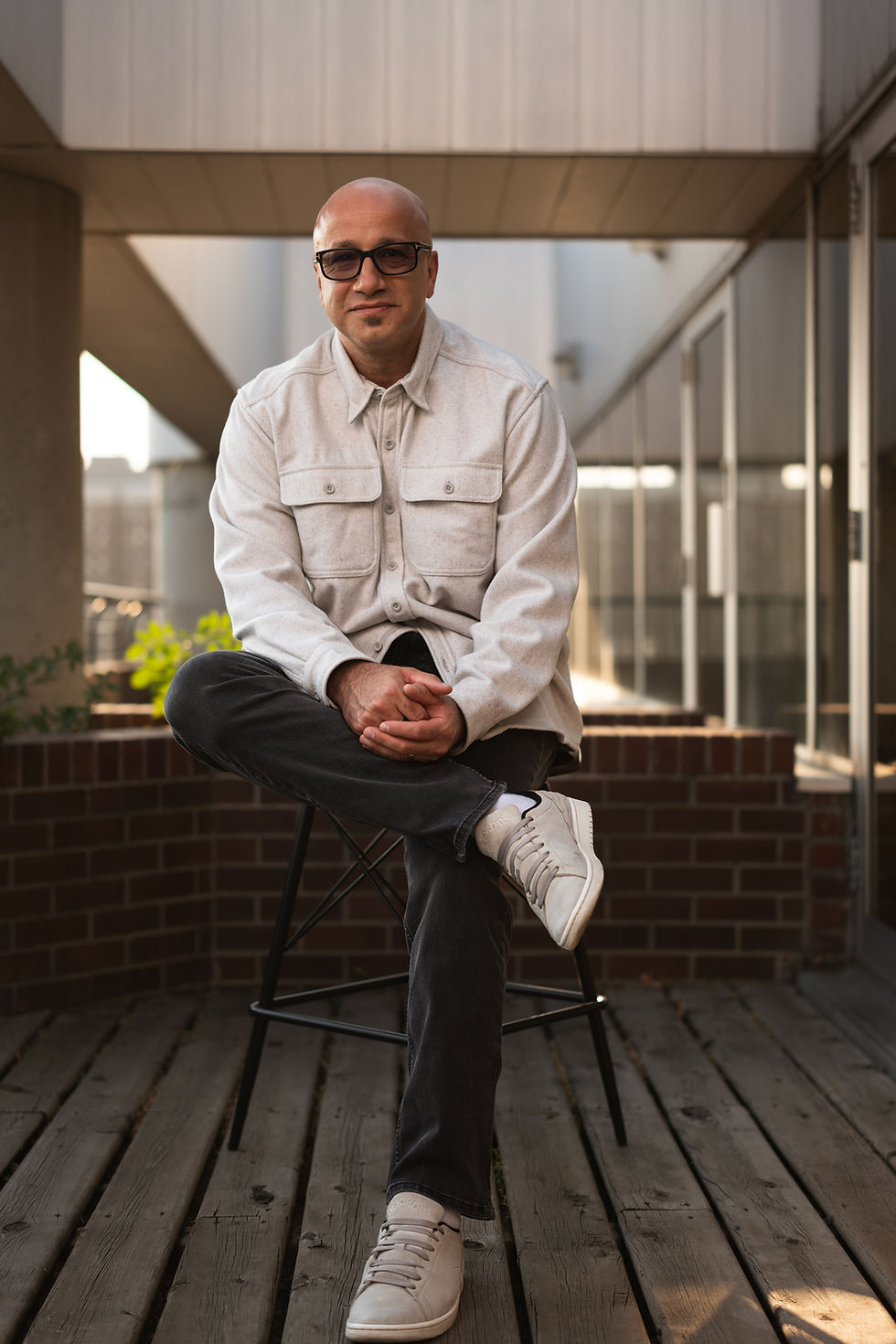
Talent DR. JORDAN DECOSTE / Photography by IHOR SAVELIEV / Grooming ANASTASIIA SAVELIEVA
While many today are beginning to fret about technology's power to distort reality, DeCoste offers a counter-narrative. He sees a future where AI could help us focus on what matters, sharpening the line between objective fact and subjective interpretation. This, he believes, will enable more grounded conversations, a prospect with profound implications in a fractured world. DeCoste also sees a new wave of radical personalization in learning, with AI acting as a tool to hone our natural cognitive strengths while methodically shoring up our weaknesses. If he’s right, technology may finally close the knowing-doing gap at a global scale, creating a more balanced and powerful cognitive life for everyone.
For DeCoste, it all comes back to a piece of wisdom he says has grounded him since grade school. “My mom always told me the brain is a muscle,” he recalls. “She would warn me that just like any other muscle, my brain will turn to mush if I don’t actively work to grow and tone it.” That metaphor left an indelible mark on DeCoste. But he’s since adapted it a little. “Because this one muscle is architectonic, since it operates all others, it really can provide a structured path to a great quality of life overall.”
This thesis is the kind a scholar might spend a lifetime refining. DeCoste decided to build a way to practice it instead.

Talent DR. JORDAN DECOSTE / Photography by IHOR SAVELIEV / Grooming ANASTASIIA SAVELIEVA
HASEL Magazine: It's not typical for PhDs to leave cushy academia for high-risk entrepreneurship. What inspired that transition?
Teaching undergraduate classes was really fulfilling while I was in the seminar room or lecture hall with students. At that time, though, I was also running a Web 1.0 business that I started during the final year of my PhD. That business was my first taste of scaling my abilities, and really showed me why traditional, classroom-style education sometimes felt really limiting. I was also starting to question post-secondary institutions overall, at that time. You know, things like "is this the right place for me?" or "what does success really look like here?" I come from a teaching heritage. Most of the people who I love and admire are teachers. So, from that background, I came to see university as a place of business, not education in the way they do it. The product of universities is specialized knowledge, like publications and fancy conferences. It’s not really about helping people to go out there and be well, you know? Anyway, contrasting that university teaching experience with what I was beginning to taste through my first business is what made me realize that I probably needed to change my environment to better practice my abilities.

Talent DR. JORDAN DECOSTE / Photography by IHOR SAVELIEV / Grooming ANASTASIIA SAVELIEVA
HASEL Magazine: What's been the defining design principle for founding and now improving Headversity?
Action. We decided that "company values" was a bit too cliché and definitely too abstract. Like, who really knows what "transparency" actually looks like in the workplace? Headversity is about taking action to improve vital life skills so that anyone can "get ahead of adversity." Oh, and by the way, this catch phrase for our proactive approach is where our company's name comes from. So, at the company level, we codified "skills and commitments" instead of "corporate values." The first, arguably most important, of those skillsets was branded as the "Doer." And the Doer is committed to taking an "action-bias." So, yeah, I'd say that's the most important founding principle. It’s also the one that still proves its value each day, whether that's in product design or sales motions.
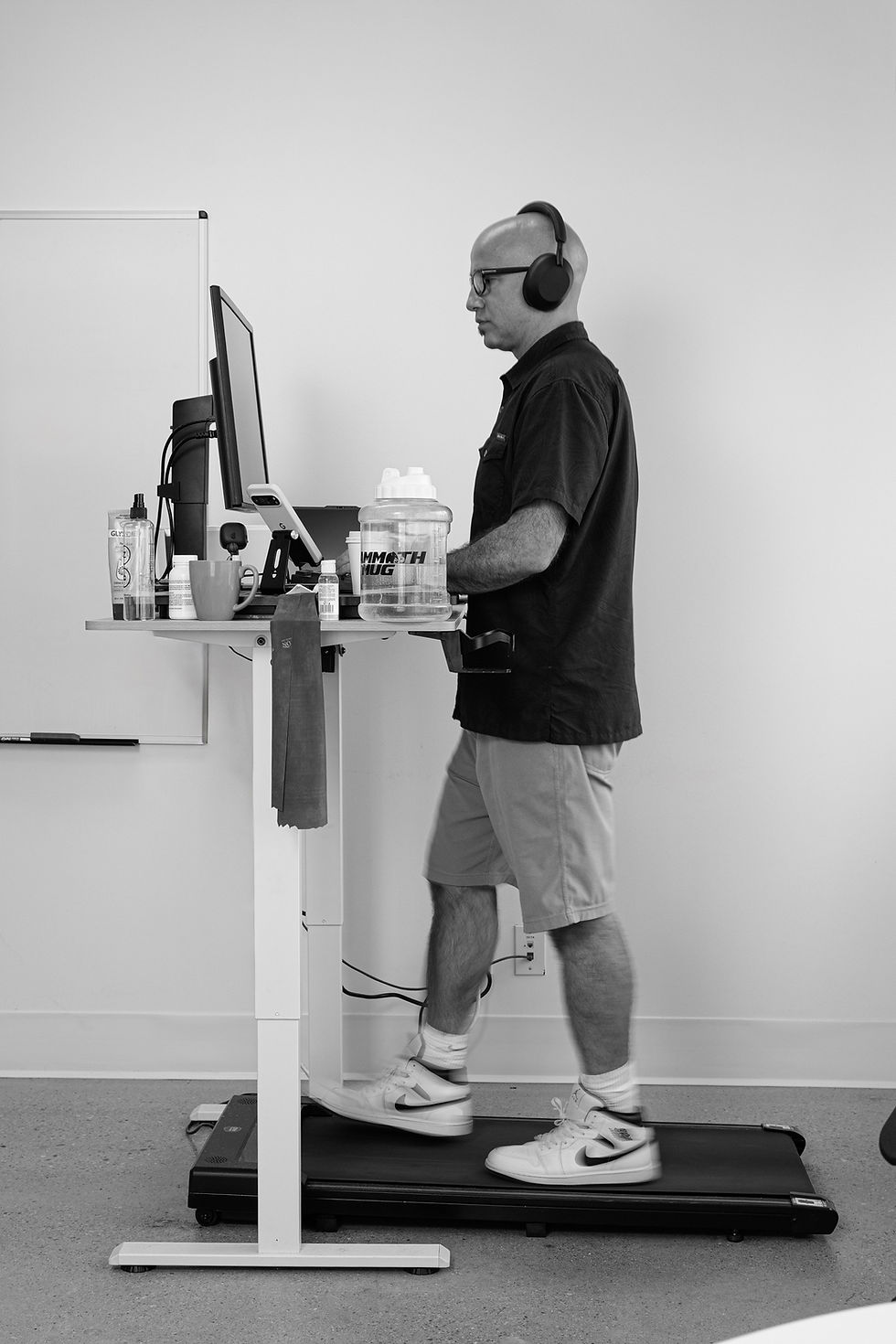
Talent DR. JORDAN DECOSTE / Photography by IHOR SAVELIEV / Grooming ANASTASIIA SAVELIEVA
HASEL Magazine: What have you found to be the most effective methods for improving wellbeing at work and in sport?
We're working really hard to give more people access to the skill sets needed to think well. Healthy thinking, or what most call "mental health," requires a certain skill set, just like physical health. And when we want to do anything well or healthily, we need to practice the required skills. So, practice is method number one. And like all excellent teachers do, providing resonance is a really useful way to make learning stick and to inspire a drive for mastery. Whatever someone’s learning or practicing must have some kind of appeal to them, some link with what matters to them, to whatever they find meaningful. That makes personalization the second method. I could go on, but I think that those two are at the top of the priority list.

Talent DR. JORDAN DECOSTE / Photography by IHOR SAVELIEV / Grooming ANASTASIIA SAVELIEVA
HASEL Magazine: What inspires you the most in your work, and how do you balance innovation for others with innovation for personal benefits?
Anyone's drive for excellence inspires me. And you can see it everywhere. A tiktokers push for the most engaging clip, a mixed martial artist's drive to perfect and win by highly technical moves, a scholar’s insistence that we can use Socrates as a model for the good life - I'm reading that book right now, so it's top of mind - or a subway sandwich maker who takes pride in remembering your order and producing your sandwich the same way but faster and faster each day. I liken this drive for excellence to the pursuit of "perfection." And unlike today’s somewhat negative understanding of perfection, I find it inspiring because the pursuit of perfection is, as a 19th-century British philosopher once said, "always beginning, never ending." That's how I balance my inspiration with benefits for others. I truly believe that the drive for self-improvement is in all of us, and each of us needs the tools to get on and stay on that journey. Personal growth is both always beginning and never ending.

Talent DR. JORDAN DECOSTE / Photography by IHOR SAVELIEV / Grooming ANASTASIIA SAVELIEVA
HASEL Magazine: Looking ahead, how are you thinking about innovation in the learning technology space writ large?
I'm very optimistic that, should we all find a way to play our technological cards right, learning technology will eventually help everyone gain a clearer sense of what really matters to them as individuals. The trick there will be harnessing emerging technology to better define the line between objective fact and subjective interpretation. I think about this a lot, and I'm getting more and more confident that there's a path here to greater meaning-making, and, yeah, to more grounded, civic-style conversations that'll benefit the political community. I also see a logical extension of this where AI can help each person identify and hone her or his natural cognitive strengths while methodically shoring up areas that could use strengthening. The possibilities for personal AI tutors and related learning applications for each learning style are breathtaking.
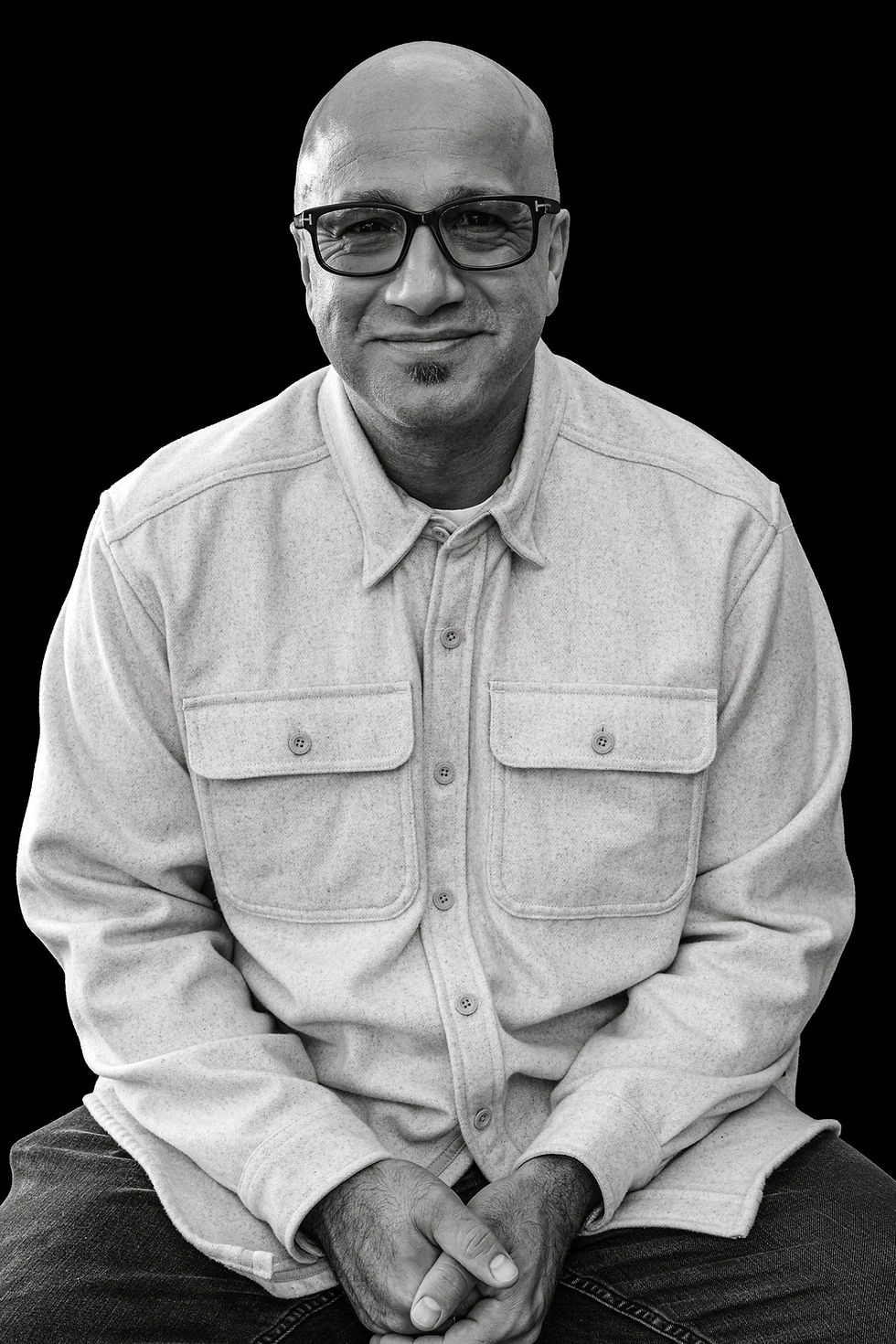
Talent DR. JORDAN DECOSTE / Photography by IHOR SAVELIEV / Grooming ANASTASIIA SAVELIEVA
HASEL Magazine: What message would you like to share with future generations to inspire them in their journey of learning and growth?
Act. Experience. Practice. You know, get out there and develop your agency. That requires work. And that work is, at bottom, about really thinking through the ideas surrounding your experience, as well as your feelings during and after all experiences. If you can develop these healthy thinking skills, your growth path will be, again, “always beginning, never ending,” and that'll feel very good. A life well lived requires healthy thinking, which always feels very good. Well, it has for me, at least.


Comments